Tree Identification
Trees in general are a very interesting point of discussion in our society. We find trees in our everyday life in literature, in art and in nature. All of us have a general knowledge and awareness of several tree species usually as a result of a tree growing close to our homes or places that we frequent. Few of us, unless we have a deep interest in the natural sciences, can identify more than a handful of trees. In Kentucky we have over 120 naturally occurring species found in our woodlands and nearly fifty that are commercially important to the valuable wood industry that is found throughout our state.
Not sure about a specific tree?
Tree and woody plant identification can be obtained for county agents, landowners, and the general public. To submit sample photos use the Woody Plant and Wildflower Identification Form link below. We no longer accept samples.
Woody Plant and Wildflower Identification Form
Tree and woody plant identification can be obtained by using the Woody Plant and Wildflower Identification Form and submitting photos.
Fill out the form...Jump to a Characteristic:
Leaf Bud
Leaf Type
Leaf Arrangement
Leaf Form
Leaf Margin
Identification Characteristics
Kentucky owes a great deal of its tree diversity to our geographical location and our wide variety of habitats from the mountains of Eastern Kentucky to the bottomlands of Western Kentucky. Learning to identify our trees can be challenging but very rewarding and will allow you to enjoy your woodlands even more! Please be warned…once you start to learn your trees it is difficult to look at any tree and not want to try and figure out what species it is.
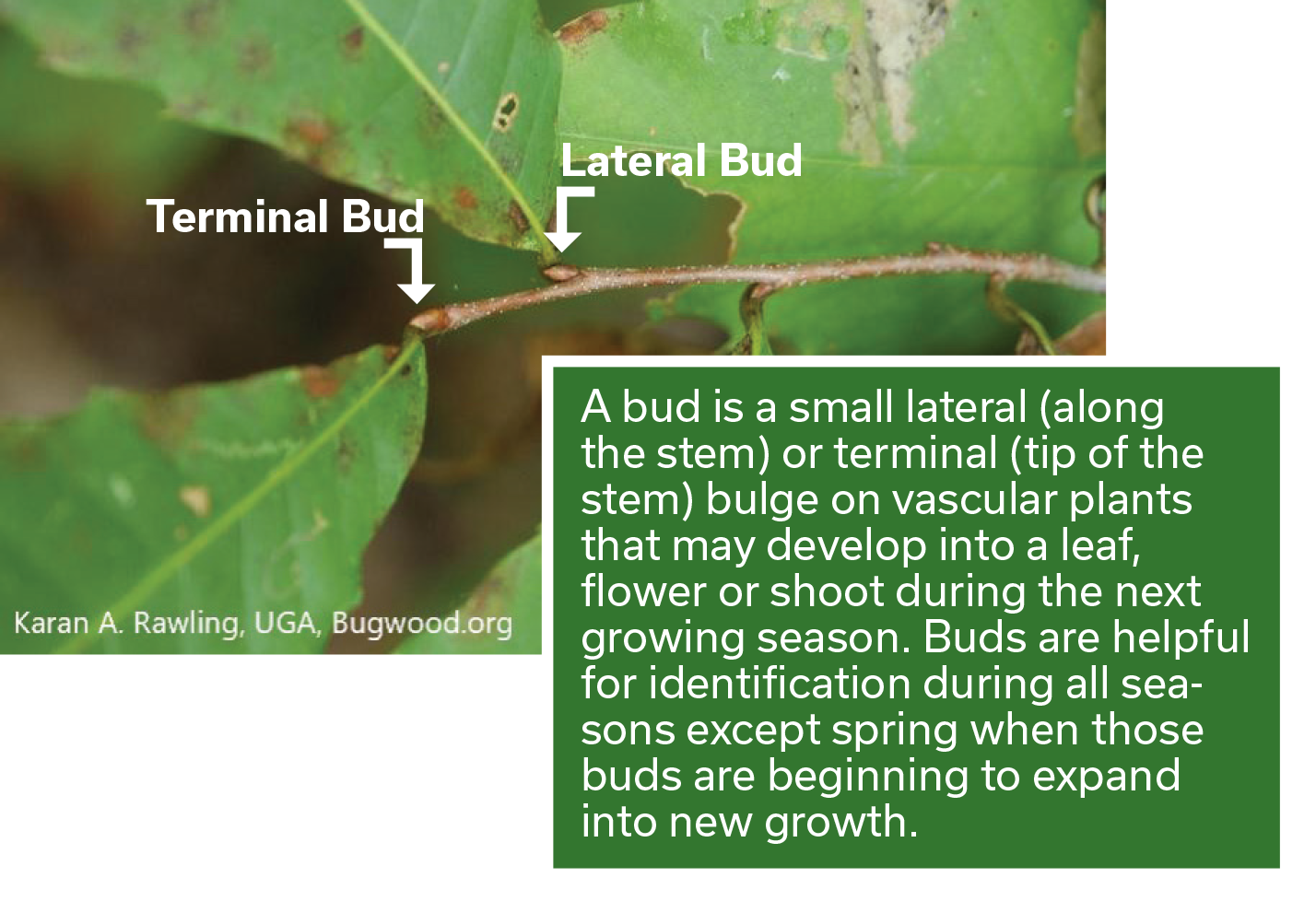
Trees, like all organisms, have identifying characteristics. The main characteristics we use to aid in tree identification are the leaves, buds, flowers, fruit and bark. In winter, the buds are the main characteristic used for identification unless the tree is a conifer with needle-like leaves. During the growing season the leaves are the primary and easiest characteristic to use for identification. However, the buds are still an important characteristic for identification even during the growing season. The two best characteristics and the ones most dichotomous keys use are based on tree leaves and buds.
A dichotomous leaf key is a great tool to use for identifying trees. Dichotomous keys are also used for flowers, animals, rocks, fish, and more! A dichotomous key contains a series of choices that lead the user to the correct name of an item or organism. "Dichotomous" means "divided into two parts." Therefore, a dichotomous key will give two choices in each step and lead you to the name of the organism you are trying to identify.
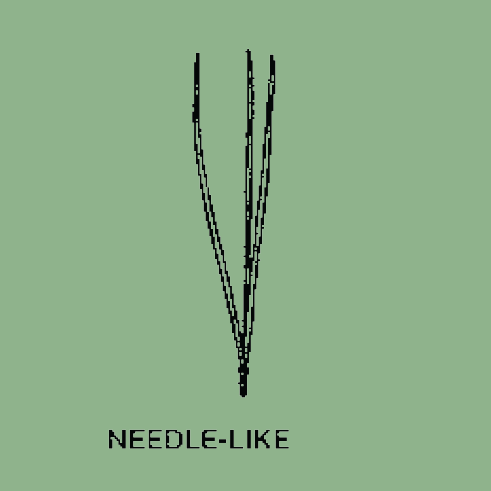
Most dichotomous tree keys begin with looking at the leaves. The leaves come in a variety of shapes, sizes, arrangements and forms. The first characteristic in a dichotomous leaf key is the type of leaves the tree has, conifer (needle-like, ex. pine) or deciduous (broadleaf, ex. oak). In this article we will focus on identifying our broadleaf trees. Kentucky has eight native conifers or trees with needle-like leaves. If you are interested in identifying our trees with needle-like leaves click here for conifers. Or click on the video to watch conifer identification.


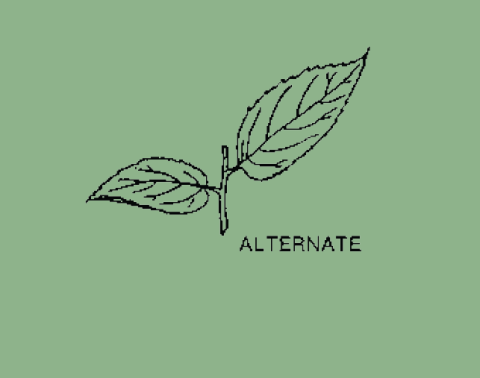
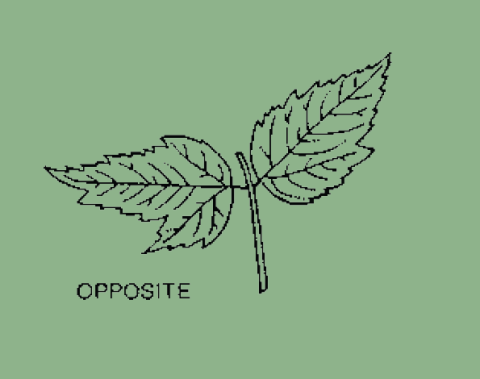
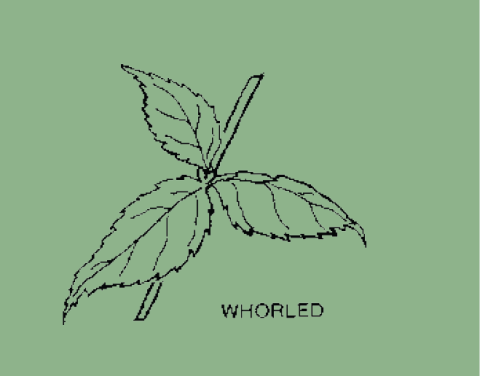
The next broadleaf characteristic you will encounter in a dichotomous key is the leaf arrangement or how those leaves are arranged on the twig. Depending on the broadleaf species, leaves will be arranged in one of three ways: opposite, alternate or whorled. Oppositely arranged leaves are paired on the twig, across the stem from each other. In Kentucky, we have four groups or families of native trees with oppositely arranged leaves: maples, ashes, dogwoods and buckeyes so if you can remember the mnemonic MADBuck you can remember our oppositely arranged tree groups. Alternately arranged leaves, which comprise most of our groups of trees, are leaves that alternate from side to side along the stem. Whorled arranged leaves will be three or more leaves that are arranged around the twig at the same location—they are whorled around the twig.
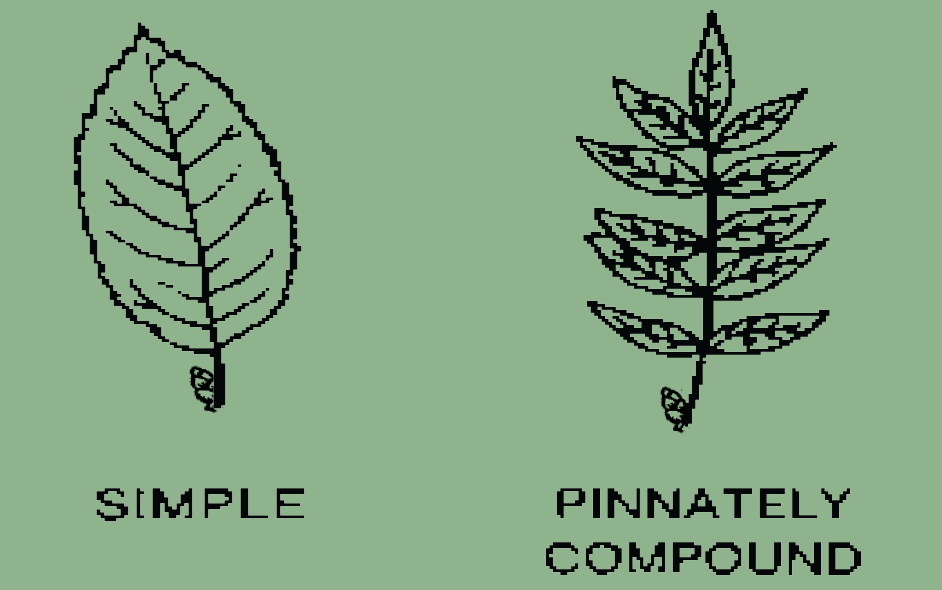
Leaf form or leaf composition is the next characteristic you will encounter in a dichotomous leaf key. Leaf form can be simple or compound. The lateral bud is critical in helping determine leaf form. A leaf with a single blade attached to the petiole with the bud at the base of the petiole is a simple leaf. An example of a simple leaf is an oak leaf. A leaf with several blades attached to the stalk or rachis is a compound leaf and the blades are called leaflets; they will not have a bud at the base of the blade. Locating the lateral bud will indicate if a leaf is simple or compound. There are several types of compound leaf forms, depending on the arrangement of the leaflets. Leaflets that radiate from one end or point of the rachis in a star or palm shape is a palmately compound leaf such as a buckeye. When the leaflets are laterally arranged on each side of the rachis the leaf is pinnately compound; black walnut has pinnately compound leaves. Bipinnately or double compound leaves are when pinnately compound leaves are again compounded. Kentucky coffeetree is a species that has this characteristic. Remember, leaflets do not have buds at the base of their stalk so look for the lateral bud.

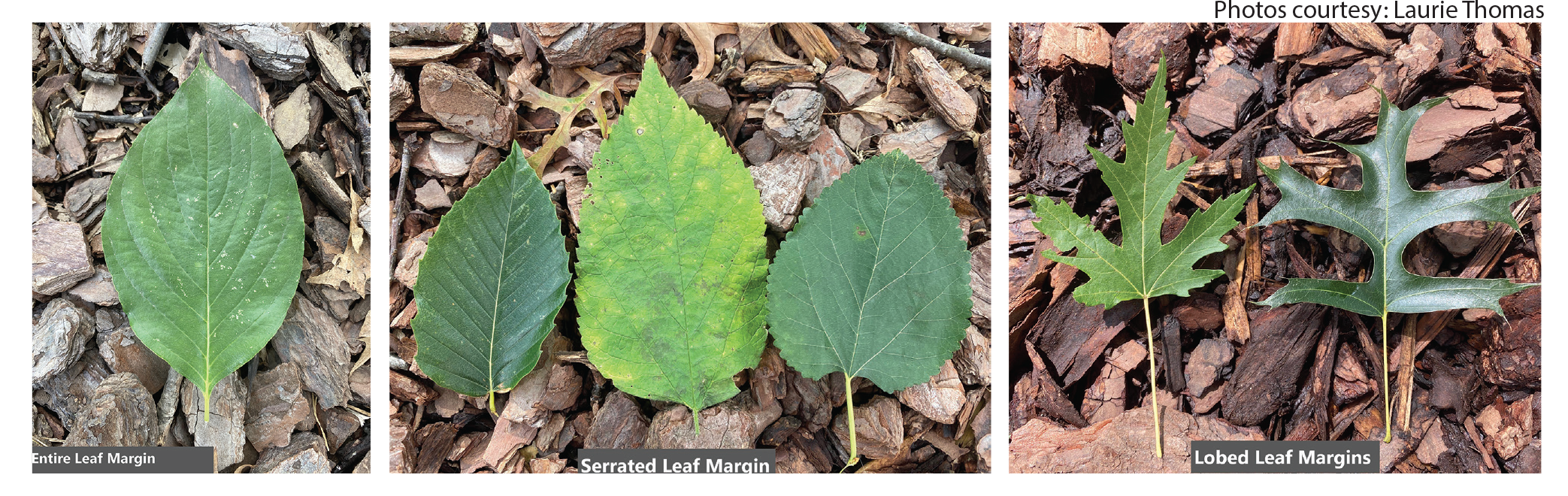
The next characteristic you will observe is the leaf edge or margin. A leaf with smooth margins and no teeth (serrations) or lobes has an entire leaf margin; dogwood is an example of a leaf with entire margins. A leaf’s margin can have teeth or serrations and the types of serrations can vary depending on species. Some serrations are small with sharp tips like a steak knife (hackberry), some are larger with sharp tips like a bread knife (American beech), and some serrations have rounded tips (mulberry). A leaf that is divided into lobes separated by sinuses that are rounded or have v-shaped indentations are said to have lobed margins; silver maple and red oak are examples of lobed leaves. A leaf can be lobed and serrated (red maple) depending on species. There are several other technical terms that are applied to leaf margins, but these are the basic margins you will encounter in an average dichotomous leaf key.
When using information on this webpage, please credit Laurie Thomas, Extension Forester, University of Kentucky Department of Forestry and Natural Resources.
Other Resources